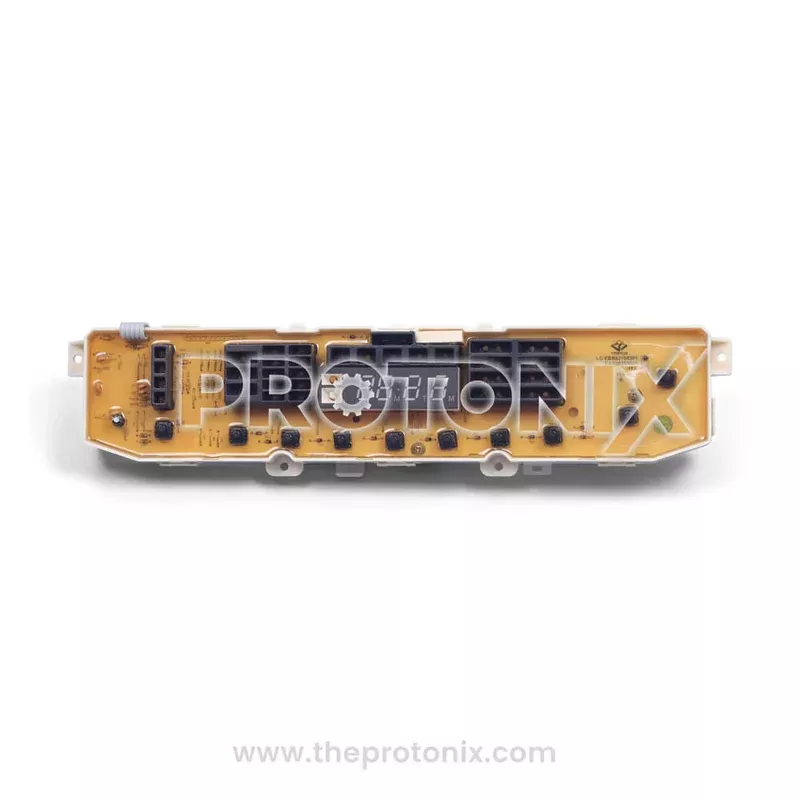
In non-inverter top-load fully automatic washing machines, the PCB serves as the brain behind every wash operation. It carries out a series of time-based commands that control essential components like the motor, water inlet valve, and drain pump. Unlike inverter systems, it functions with a fixed-speed motor and uses relay-driven logic to maintain a predefined sequence of actions. The PCB also interprets input from various sensors to help manage water level detection and door safety mechanisms during each phase.
Faults in the board are usually triggered by common environmental and electrical stressors. Surges in power supply, internal overheating, or gradual corrosion from humidity can all affect functionality. When problems occur, the washer may stop responding, cycle endlessly, or fail to start entirely. In some cases, users may hear continuous relay clicks or see the panel lights flashing without function. Because these systems operate on strict programmed logic, even minor disruption can interrupt overall performance. Replacing the damaged PCB is typically necessary to restore cycle control and reinstate normal machine operations.